The Transformative Power of Cold Wax
Updated: Jun 8
I did not begin making my own cold wax medium out of principle. I did it out of necessity. Commercial waxes have their place, but they assume a certain way of working — a certain pace and a certain scale. As my paintings grew larger, those assumptions began to feel restrictive.
Drying times did not suit the way I moved across a surface. The viscosity was not always what the painting required. So I began making my own.

Control Over the Medium
Making my own wax changed the relationship. I could adjust the balance — stiffer when I needed resistance, looser when I wanted flow. I could slow the drying process when a painting needed time to breathe, or tighten it when I needed decisiveness.
Once the medium became something I controlled rather than accommodated, the process opened up. The wax stopped being merely an effect; it became part of the structure of the painting itself.
Scale, Surface and Light
That freedom — especially at scale — has been quietly transformative. Working at larger dimensions, the surface becomes less predictable, more demanding. The wax responds differently; it requires a different kind of attention.
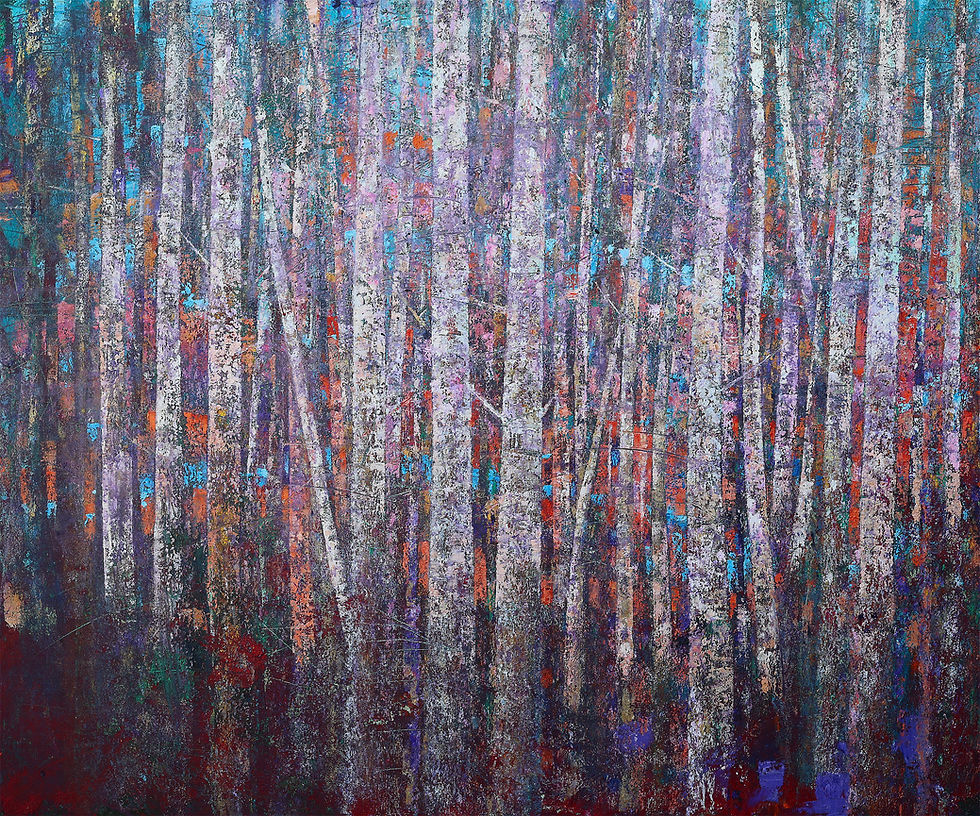
Layering became central to the work. Building textures and depths slowly, scraping back, reworking — the surface accumulates a history. That history is part of what the painting is. "Imperfection, Patina and the Painted Surface"
Nature remains the constant reference point. The landscapes I work from — the Fenlands, forests, the quality of northern light — inform the colour and emotional register of each piece. The wax holds that light differently than oil alone; it gives the surface a particular stillness.

Further reading → Imperfection, Patina and the Painted Surface


Comments