Futurism, Movement and the Large-Scale Acrylic
- peter corr
- Mar 11, 2021
- 2 min read
Updated: May 24
Futurism, Movement and the Large-Scale Acrylic
The Futurist painters of the early twentieth century were preoccupied with movement — with the representation of speed, energy, and the dynamism of modern life. Boccioni, Severini, and Balla developed a visual language for depicting objects in motion: the fragmentation of form, the multiplication of contours, the use of directional marks to suggest velocity. These ideas remain productive for painters working today, even in contexts very different from the urban modernity that inspired them.
Movement in Paint
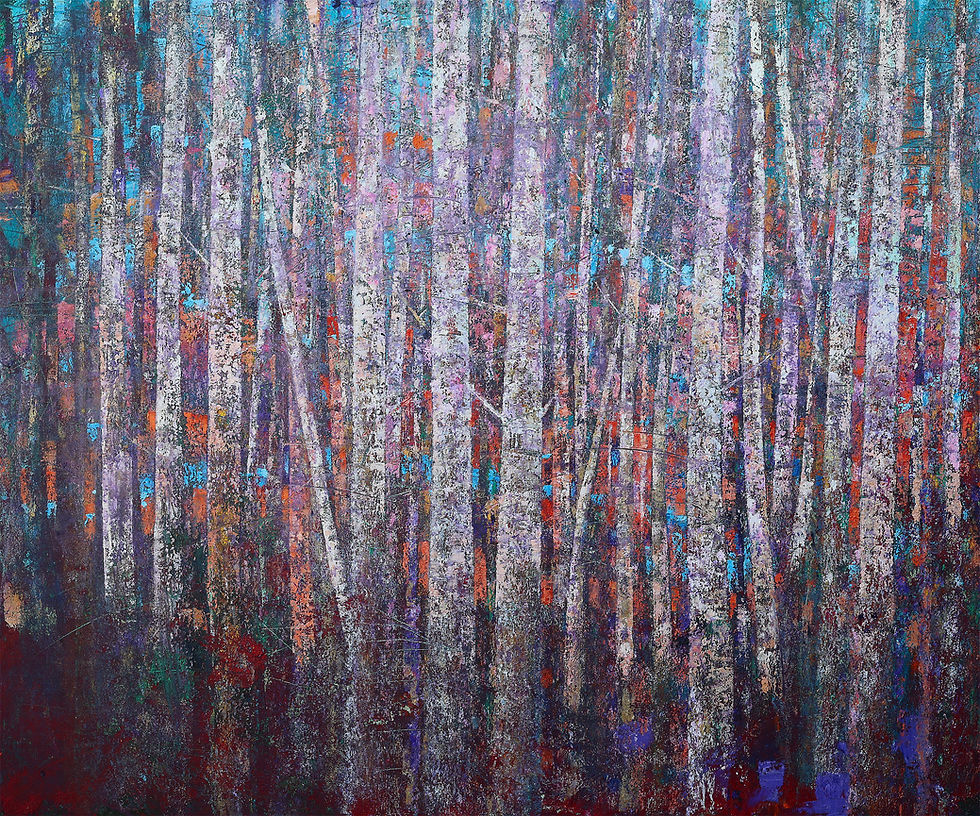
In my large-scale acrylic paintings, movement is not depicted but enacted. The marks on the canvas are traces of physical movement — the arm, the wrist, the body — and the energy of that movement is preserved in the dried paint. Working at a large scale amplifies this quality: the whole body becomes involved in the act of painting, and the resulting marks carry a physical presence that smaller-scale work cannot achieve.
The Futurist influence is felt not in the subject matter — these are not paintings of machines or cities — but in the approach to mark-making: the use of directional marks to create a sense of energy and movement, the fragmentation of form to suggest multiple simultaneous viewpoints, the insistence on the painting as a record of a physical act rather than a description of a static scene.
Scale and Ambition
Working at a large scale is, in itself, a statement of ambition. It requires a commitment to the work that smaller-scale painting does not demand: the physical effort is greater, the decisions are more consequential, and the relationship between the painter and the canvas is more intimate. The large-scale acrylic paintings in this series are an attempt to work at the limits of what the medium and the body can do — to make paintings that are as large and as energetic as the subjects they address.


Comments