The Physicality of Oil and Cold Wax — Surface, Texture and the Painted Object
Updated: May 31
Photography is an exceptional process for creating images, but it has certain limitations — particularly in capturing the texture and material weight inherent in painting. A fundamental aspect of my work is the significant accumulation of paint on the canvas surface.
This thick application of oil and cold wax is a crucial element of my visual language. Capturing the tangible quality of oil paint with a digital camera is challenging, so I have used strong directional lighting and a macro lens to highlight the tactile character of the work.

On Beginning a Painting
I am occasionally asked about my approach to beginning a painting — where my inspiration originates, and what my objectives are. I could explain that I meticulously plan each composition through a series of plein-air sketches, developing these preliminary ideas in the studio before transferring the final design to canvas. I might also claim that I systematically build each successive layer of oil and cold wax — but that would not be accurate. It is not that I lack a plan; I have one. It would be impossible to begin without some objective or sense of direction.

Paint Has Its Own Will
Any plan inevitably encounters the limitations imposed by the material itself. Paint has its own will and resists being manipulated into any role or action it is unwilling to perform. Paintings often deliver exactly that kind of unexpected challenge. I have thought at length about the complexities of painting, yet I remain far from resolving the longstanding tension between representation and abstraction. There is a constant dynamic interplay in both directions, and the middle ground is strewn with the remnants of unfinished ideas and partially realised possibilities.

Composition and the Picture Plane
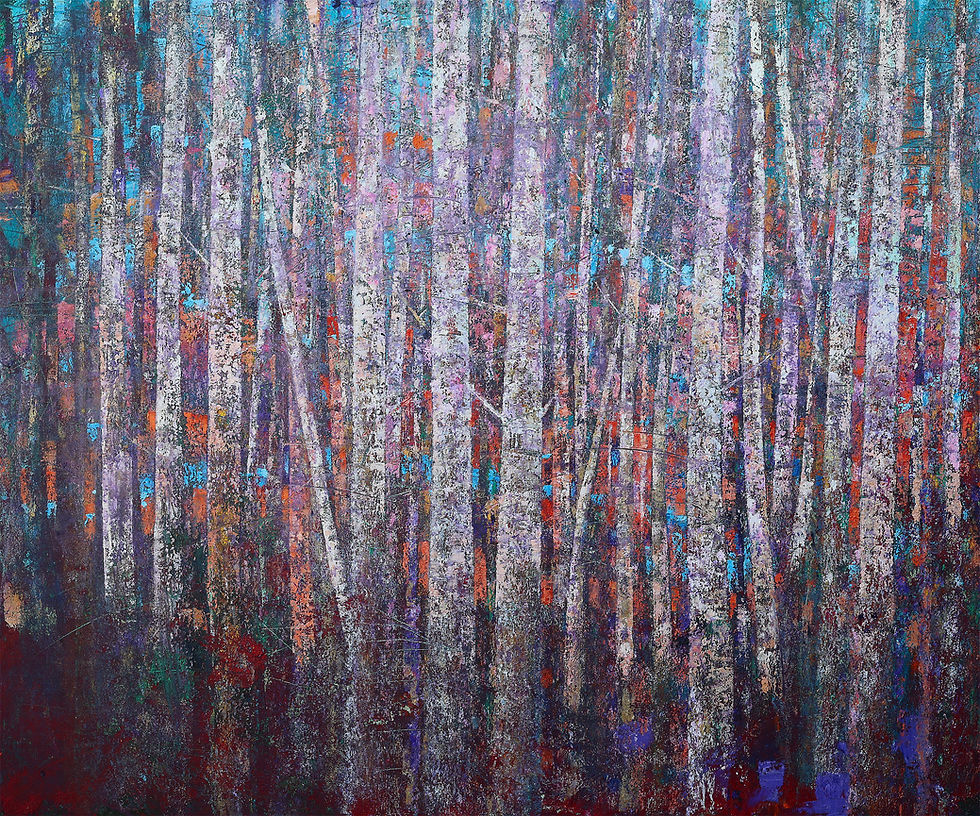
In this painting, the composition is intentionally awkward, accommodating modernist influences. There are elements of Impressionism, Fauvism, and Expressionism within the work. The paint is applied in thick layers — often tentative, exploratory, venturing into uncertain territory. Colour both conceals and reveals in equal measure; fleeting appearances are abruptly removed and, just as inexplicably, reinstated. The process resembles a game of chance and necessity.

The Trees as Structure and Symbol
The composition presents another kind of tension. The vertical, rhythmic arrangement of the trees is more concerned with maintaining the flatness of the picture plane than with suggesting spatial depth or recession. It remains a compromise — a form of aesthetic indecision. Yet I have noticed something beyond the conventions of visual perception at work here. The regimented line of trees may be more than a pictorial device.
From a symbolic standpoint, the trees read as a continuous wall or improvised barrier, with scarcely enough space for a person to pass through. Extending this further, they resemble vertical bars — obstructing entry and escape, separating us from what one might call the 'secret of things'.

The Silent Influence of Painting
Many writers have observed that painting is an irrational activity, lacking clear utilitarian value. Yet the interaction of line, tone, texture, and colour exerts a quiet influence on us all — provided we are willing to give it time, and to look beyond our initial impressions.



Comments