Oil and Cold Wax — A Painter's Perspective
Updated: May 31
I have been working with oil and cold wax medium for many years, and it remains the combination that I find most productive for the subjects I explore — landscape, light, memory, and the tension between representation and abstraction. These notes offer a personal account of the medium: what it does, how I use it, and why I find it so well suited to my practice.

What the Medium Offers
Cold wax medium modifies oil paint in ways that open up a wide range of surface possibilities. It adds body, reduces drying time, increases transparency, and allows for the creation of textured effects that would be difficult or impossible to achieve with oil paint alone. The matte finish of cold wax is one of its most distinctive qualities: unlike oil paint varnished to a high gloss, cold wax paintings have a surface that absorbs light rather than reflecting it, giving them a quality of quiet presence that suits the contemplative subjects I most often explore.
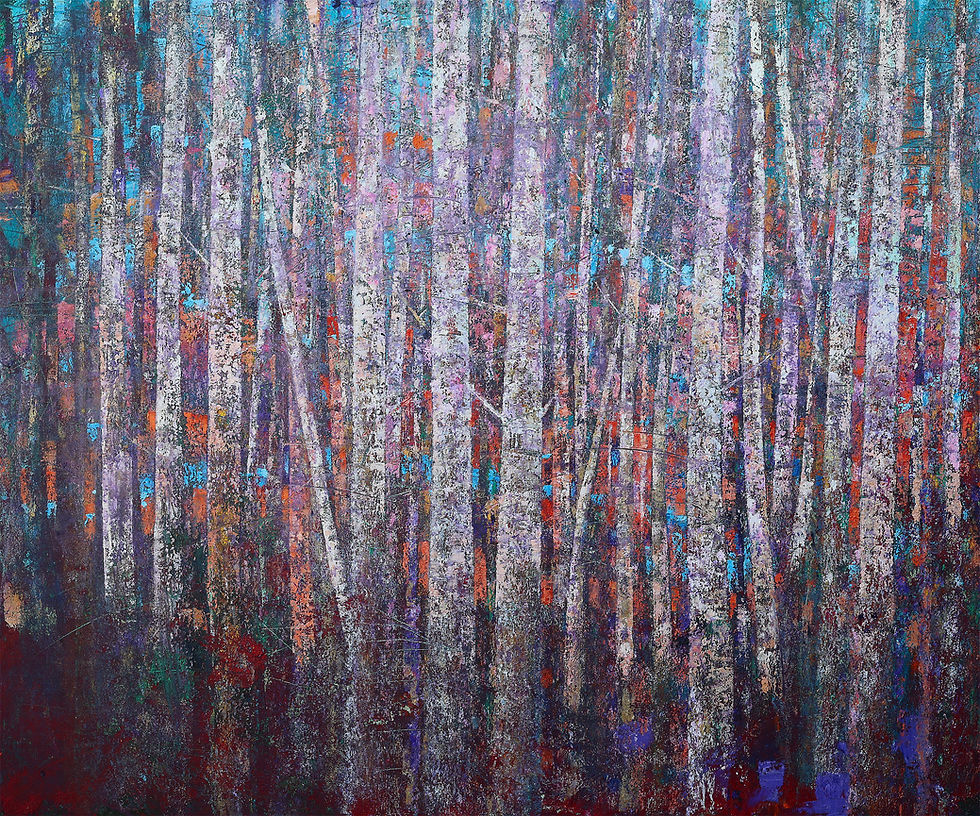
The medium also allows for a particular kind of working process: building up layers, scraping back, incising, and reworking. Each layer responds to and modifies what lies beneath, and the surface that results carries the history of its own making — traces of earlier marks, shifts in colour and tone, and the physical evidence of the tools used.

Drying Time and Layering
One of the most practical advantages of cold wax medium is its effect on drying time. Oil paint alone can take days or weeks to dry sufficiently to allow overpainting; cold wax significantly accelerates this process, making it possible to work in multiple layers within a single session. This speed of working changes the character of the painting process — making it more immediate, more responsive, and more open to the kind of accumulation and revision that produces complex surfaces.
The capacity to layer rapidly also means that the painting can develop in ways that are not entirely anticipated. Each new layer responds to what lies beneath it, and the interaction between layers produces effects that could not have been planned in advance. This quality of productive unpredictability is one of the things I value most about the medium.
Mark-Making and Tools
The palette knife is the primary tool of my practice — not a secondary instrument for mixing paint, but the principal means by which paint is applied, moved, and shaped on the canvas. The knife cannot do everything that a brush can do, but its limitations are productive: the marks it makes are direct, physical, and committed, and they carry the energy of the gesture that produced them.
I also use brayers, scrapers, sponges, and card — each producing a different quality of mark, and the variety of marks that results from using multiple tools is central to the visual interest of the surface. The hand is always close to the surface, and the physical engagement of making is central to the experience.

A Personal Practice
My approach to oil and cold wax is not systematic or rule-bound. I work intuitively, responding to the painting as it develops, and the most interesting passages tend to emerge from the interaction between layers rather than from any single deliberate mark. The medium rewards patience and a willingness to work through failure: the paintings that succeed tend to be the ones that have been reworked most extensively, each revision bringing the surface closer to the quality of presence that I am looking for.
This is, I think, what the medium is best at: not the production of smooth, controlled surfaces, but the accumulation of depth — visual and physical — that comes from sustained engagement with the material.


Comments