'Afterglow' — Layering, Erasure and the Fenland Landscape
Updated: May 26

'Afterglow' — The Light Series
This painting belongs to The Light Series, a group of works concerned with the landscape of the Cambridgeshire Fenlands. It is a personal reflection on the open fields and skies of East Anglia, though the work carries no topographical information to act as a compass or guide. There are no landmarks, no trees or hedgerows, no features that would anchor the image to a specific place. The viewer is left with the universal language of horizontal and geometric divisions: earth and sky in partnership, an archetype that is anchored in our upright stance as we gaze outwards across the land.
Layering and Erasure
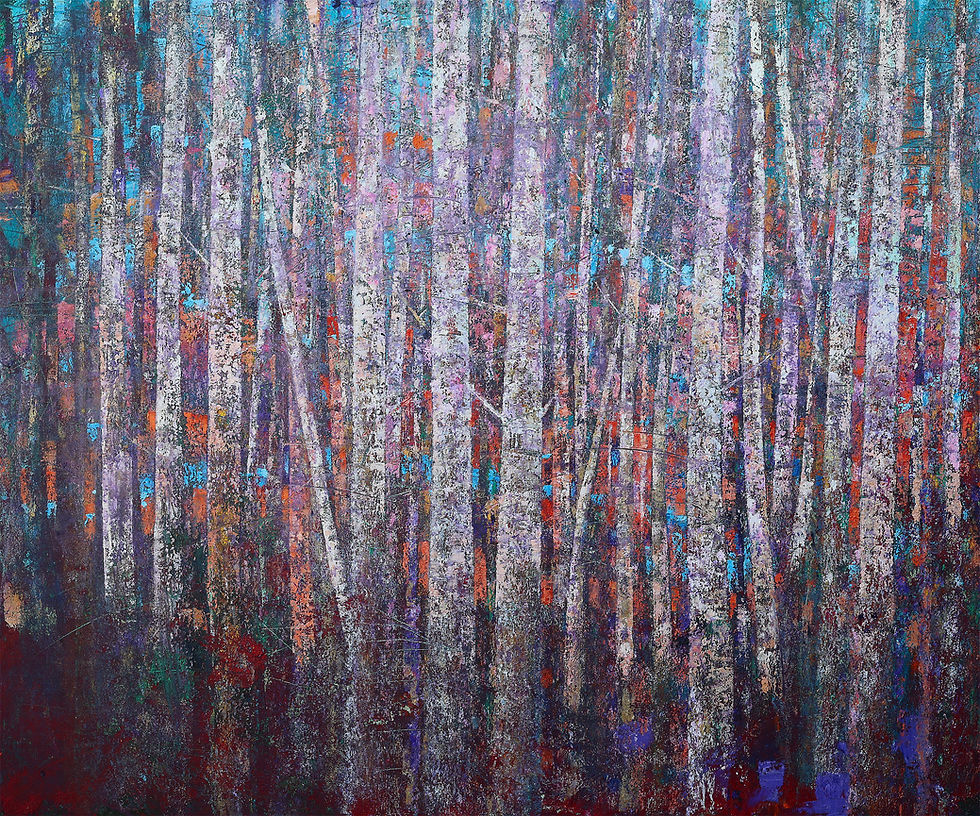
The depth and translucency of the surface are achieved through a sustained process of layering and erasing. Paint is thinned with a glazing medium and applied liberally with large brushes, then partially removed with cloths and worn fabric. Each pass leaves a residue — a trace of what was there before — and the accumulated result is a surface that holds light in a way that a single application of paint cannot.
The parallels with stratification, sedimentation, accretion, and erosion are both poetic and intentional. The painting is built as a landscape is built: slowly, through the accumulation and removal of material over time. The title refers to the quality of light that remains after the source has gone — the afterglow that lingers in the sky and on the surface of still water, and that this process of layering and erasure attempts to hold.


Comments