Gestural Painting — Scale, Movement and the Large Acrylic
- peter corr
- Feb 26, 2021
- 1 min read
Updated: May 24
Gestural Painting — Scale, Movement and the Large Acrylic
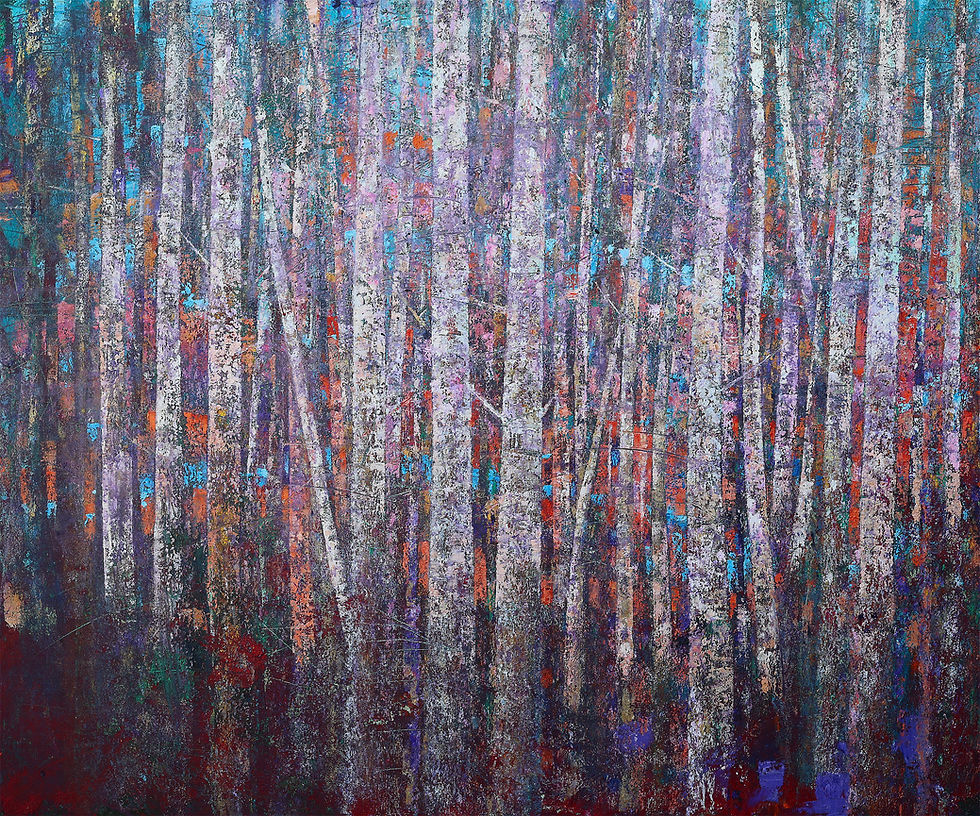
Gestural painting is, at its most fundamental, a record of physical movement. The marks on the canvas are traces of the body in motion — the arm, the wrist, the hand — and the energy of that movement is preserved in the dried paint. Working at a large scale amplifies this quality: the whole body becomes involved in the act of painting, and the resulting marks carry a physical presence that smaller-scale work cannot achieve.
Scale and the Body
The large acrylic paintings in this series were made on canvases that required me to work standing, moving around the canvas, using the full reach of my arms. The scale of the work determines the scale of the gesture: a small canvas invites small, controlled marks; a large canvas demands larger, more committed ones. This relationship between the scale of the support and the scale of the gesture is one of the fundamental dynamics of painting, and it is one that I find endlessly productive to explore.
Acrylic paint is particularly well suited to gestural work at large scale. Its quick drying time means that marks can be made rapidly and built up without the long waiting periods that oil painting requires. The paint can be applied thickly, in impasto, or thinned to a fluid consistency that allows it to be poured, dripped, or dragged across the surface.


Comments