Texture, Tactility and the Integrity of the Picture Plane
Updated: May 31
Texture in painting is not merely a surface quality — it is a structural element that affects the way a painting is read and experienced. A heavily textured surface asserts its own physical presence, reminding the viewer that what they are looking at is a material object as well as an image. This assertion of materiality is, in my view, one of the most important things a painting can do: it resists the tendency to treat the painted surface as a transparent window onto a depicted world, and insists instead on its own reality as a made thing.
Tactility and the Viewer
There is a paradox in the experience of a highly textured painting: the surface invites touch, but touching is forbidden. The viewer is drawn to the physical quality of the paint — the ridges, the grooves, the areas of impasto — but can only experience them visually. This tension between the visual and the tactile is one of the things that makes textured painting particularly engaging: it creates a kind of frustrated desire that keeps the viewer in front of the work longer than a smooth surface might.
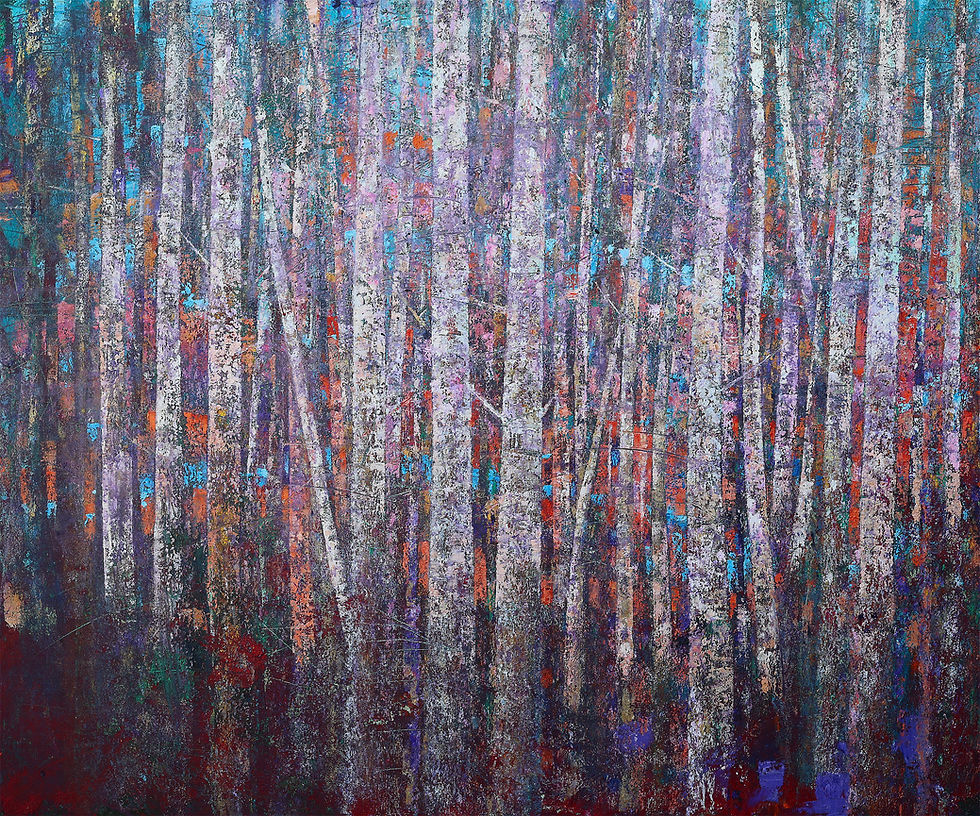
In my own work, texture is created through the layering and scraping of oil and cold wax medium. The surface is built up through multiple applications of paint and wax, then scraped back to reveal earlier layers, then built up again. The result is a surface that carries the history of its own making — a record of decisions, revisions, and accidents that gives the painting its particular character.
The Integrity of the Picture Plane
The picture plane — the flat surface of the canvas — is both the foundation and the subject of painting. Every mark made on it is a negotiation between the desire to create an illusion of depth and the reality of the flat surface. Texture complicates this negotiation: a heavily worked surface is simultaneously more and less illusionistic than a smooth one. More, because the physical relief of the paint creates actual shadows that suggest depth; less, because the insistence of the material surface makes it impossible to forget that one is looking at paint on canvas.


Comments