Cold Wax Medium — What It Is and Why I Use It
Updated: May 25
I have been working with cold wax medium for about ten years, and I consider it one of the most versatile and productive tools available to painters. I discovered it by chance while searching for ways to create impasto and enhance the textural qualities in my artwork. While it is possible to build impasto with oil paint alone, it typically requires large amounts of paint and very long drying times between layers. Cold wax completely changes this process.

Why Use Cold Wax Medium?
Cold wax medium adds significant body to oil paint and allows the painter to adjust the ratio of medium to paint to suit their working style. It accelerates drying time considerably, which means that multiple layers can be applied within a single session — something that is simply not possible with oil paint alone. The medium also improves transparency and workability, and it dries to a matte finish that absorbs light rather than reflecting it, giving the surface a quality of quiet presence that suits the contemplative subjects I most often explore.
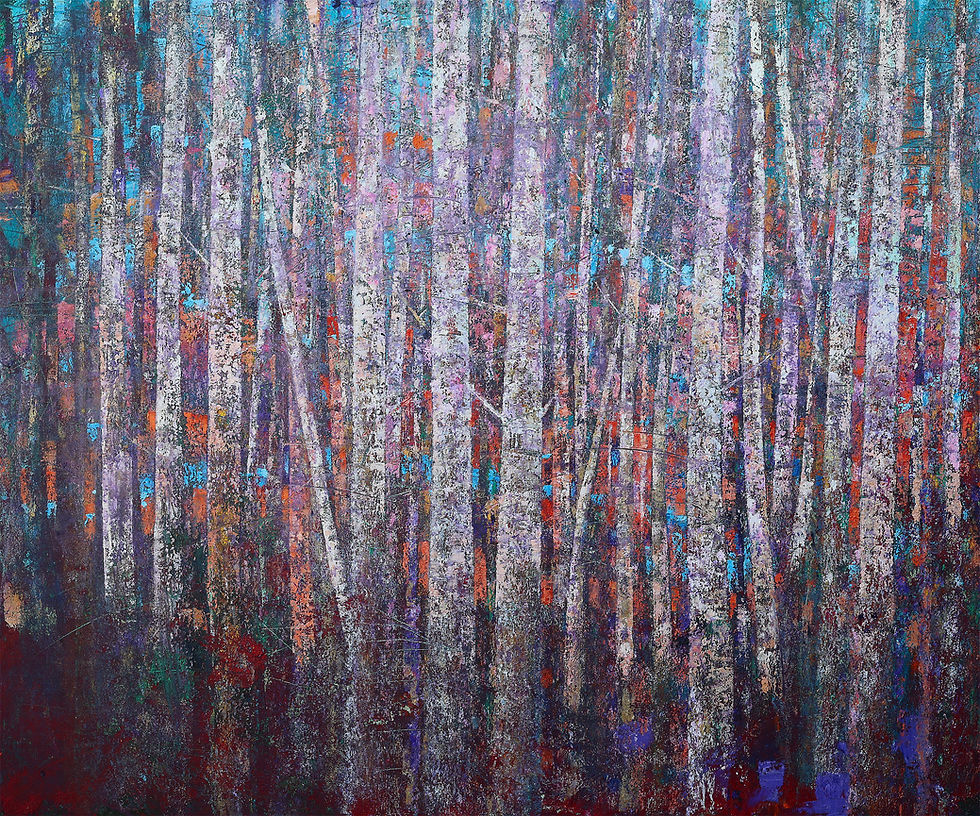
The combination of oil and cold wax opens up a wide range of surface possibilities: from thin, translucent glazes that allow earlier layers to show through, to thick, sculptural impasto that holds the marks of the tools used to apply it. Both raised and indented marks are readily created and retained by the medium, and the surface that results carries the history of its own making in a way that is central to the character of the work.

Using Fluid Cold Wax Medium
Fluid cold wax medium is ideal for covering large areas with colour using brushes, sponges, rollers, and brayers. A thicker medium is better suited for creating pronounced textures with palette knives, cards, and various unconventional tools. If you enjoy scratching and scraping through layers of colour, a thicker consistency will retain those marks effectively. You can adjust the ratio of wax to solvent to achieve the ideal consistency for different stages of your painting.
The initial blend of turpentine and wax can also be modified. For work that requires fine detail, a more fluid consistency is preferable, whereas a stiffer blend works best for heavy impasto and sculptural surfaces. Experimenting with these ratios is the most effective way to learn what the medium can and cannot do. old wax, the significance of timing becomes more apparent. The drying process needs to be adapted based on the mixing ratio and various factors at play. It is not possible to provide exact drying times because they depend on numerous elements, such as the weather, humidity in the studio, the thickness of the applied layers, and the specific materials used.
The medium goes through several distinct stages: it starts as open and workable, transitions to a state where it can be incised and marked with precision, and finally reaches a fully cured surface that is hard, stable, and matte.
Understanding these stages and learning how to work with them, rather than against them, is crucial for developing a practice with cold wax. The most intriguing surfaces often result from paintings that have been revisited at various stages of drying, with each intervention responding to the quality of the surface at that moment.


Comments