Surface, Movement and the Dynamic Quality of Cold Wax
Updated: Jun 8
Cold wax is a versatile and forgiving painting medium. Its essential characteristic is the ability to respond quickly to changing ideas and chance events whilst working on a painting. Those with experience of traditional oil paints will know the limitations imposed by extended drying times — sometimes days or weeks must pass before successive layers can be applied effectively.

The Nature of the Medium
Cold wax is both transformative and liberating, though it will not suit every painter. Those primarily interested in fine control and meticulous detail may find it frustrating. The ratio of wax to turpentine can be adjusted to maximise the flow qualities of the oil pigment, but at its heart, cold wax is a medium for those who enjoy working with tactile qualities, raised surfaces, and impasto.


Working Through the Painting
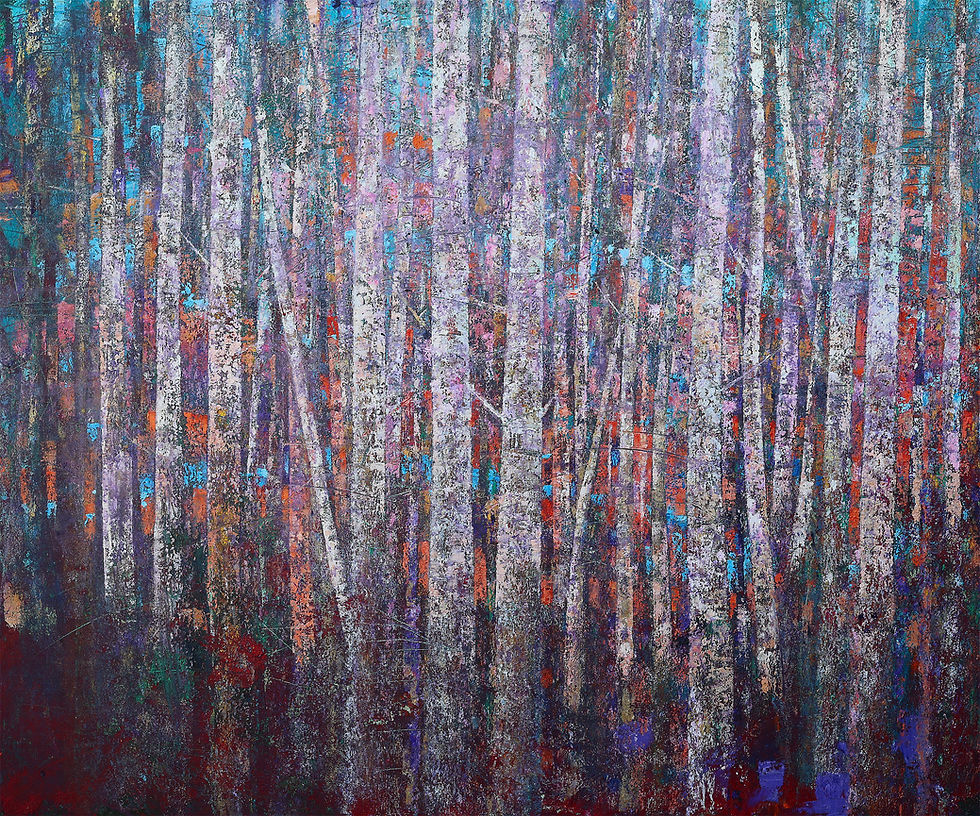
This landscape painting on canvas employs a range of techniques and approaches. The first layer is applied with a brayer using burnt umber and phthalo blue with 50% cold wax. Lighter tones of burnt sienna and yellow ochre are then worked over the textured first layer, creating opportunities for carving and mark-making in a process closely related to intaglio etching. Pumice stone and organic material have also been added to the paint and cold wax mix to generate unexpected textures and raised surfaces. Although the work alternates between brayers, palette knives, and brushes, the final layers use the flat edge of cards and palette knives to introduce highlights and emphasise depth.


On Knowing When a Painting is Finished
I have not yet decided whether this painting is finished. I prefer to wait for the dust to settle before making a final judgement. In my experience, ideas and feelings about a work shift constantly, and time is often needed before it becomes clear what has been achieved — or what has not. There are always perceptual adjustments to make: that psychological and physical space between the painting and the painter is never fixed. The criteria for judging the value of creative work are not stable, and one can only hope for an alignment of thoughts, feelings, and intentions with the practical outcome — this particular collection of tones, textures, and marks on a stretched sheet of woven cotton.



Comments